Benefits
Why sea moss is becoming a daily ritual for people who've tried everything
September 15, 2026 · 8 min read
Sea moss has gone from something most people had never heard of to a fixture in kitchens and morning routines almost overnight. If you're reading this, you've probably come across it and wondered whether it lives up to what people say, or whether it's worth the money. This is a straight answer: what sea moss actually is, where it comes from, and why a growing number of people have quietly made it part of their day.
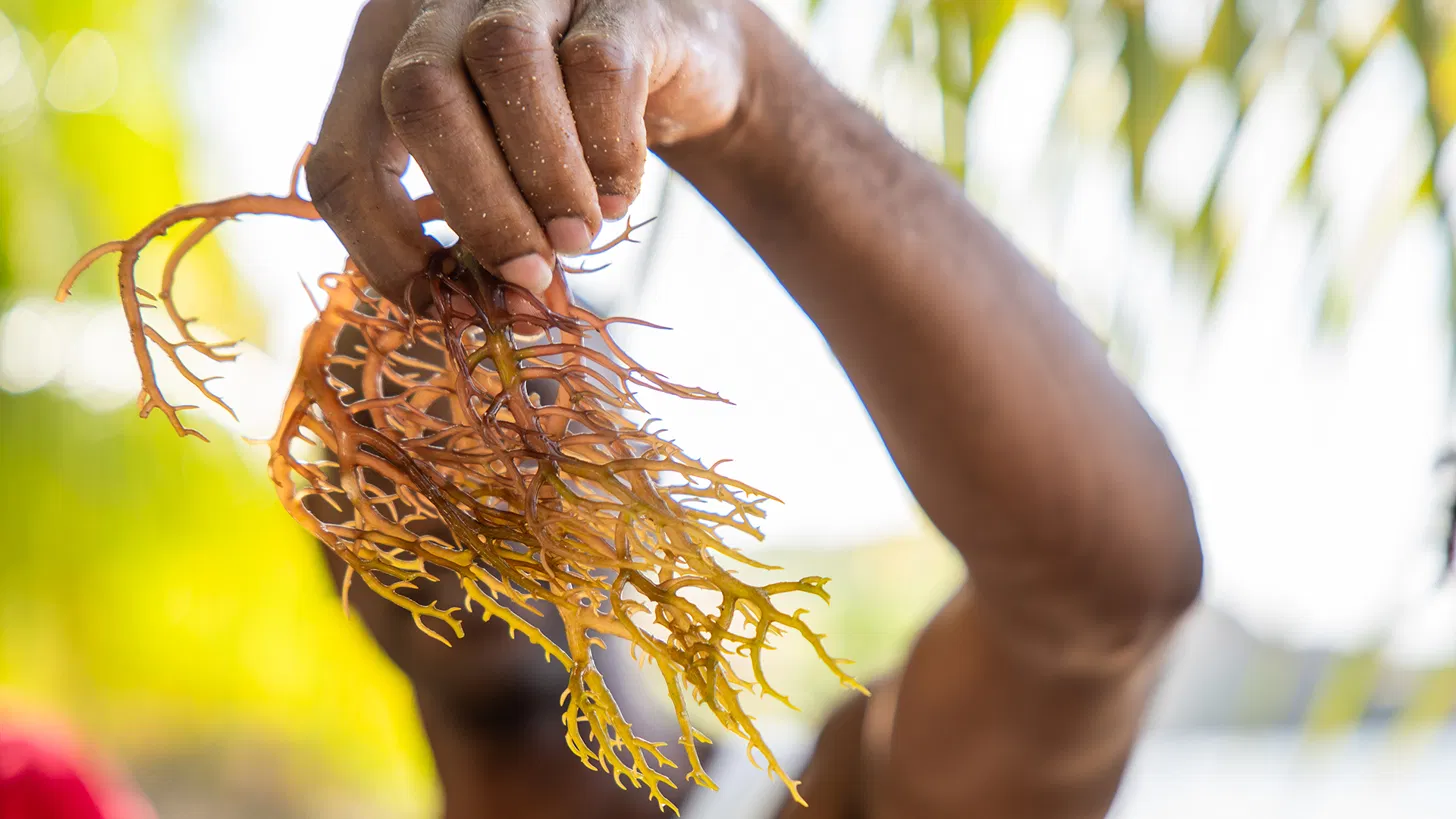
It's a red algae, a sea vegetable, closer to the nori wrapped around a piece of sushi than to anything made in a lab. Coastal communities in Ireland and the Caribbean ate it as everyday food for generations, simmered into drinks and folded into meals, valued as something you had regularly rather than reached for in a crisis. That's the first thing worth holding onto: it's food, and it's been food for a very long time.
The many reasons people reach for it
Almost everyone arrives at sea moss through a single door: one specific thing they're hoping it might help with. That's usually how it begins, a jar bought with one reason in mind.
What's easy to miss from the outside is that sea moss was never that kind of product in the first place. Most of what fills the wellness aisle is built to patch a single symptom: a serum for the skin, a capsule for the gut, a powder for the afternoon slump. Each one is a patch on a different leak, sold by a different brand, and none of them touch anything beyond the one thing they're aimed at. That isn't a conspiracy. It's just how the business is organized. Nobody builds a company around the boring, upstream basics, so nobody's marketing ever points there.

Sea moss sits in the other category entirely. It isn't a targeted fix, it's a whole food, something eaten as part of general daily nutrition the way a vegetable is, rather than a single-purpose supplement aimed at one symptom. That's a genuinely different kind of thing than the jar an ad can make it look like, and it tends to be the moment the penny drops: this isn't a hack, it's food, with a longer and more serious history than the noise around it suggests.

It's also why people arrive at it from different directions. Some come for steadier energy through the day; some for a gut that feels calmer and digestion that feels easier; some for skin they feel more at home in; some just to feel lighter instead of heavy and sluggish. Others reach for it because they're done with prescriptions and synthetic fixes and want the older, time-tested way, a whole food people leaned on for generations. And plenty come simply because they've quit everything they've ever tried, and suspect the problem was never the thing itself, but that nothing ever lasted long enough to matter.
That last one is the thread under all the rest. Whatever first brings someone to sea moss, the ones who notice anything are the ones who kept going. What it does for any one person is theirs to discover once it's a real part of the day.
Where it's grown decides what's in it
How rich sea moss is depends heavily on where it grew. It's a genuinely mineral-dense food to begin with, especially set against most land plants, and even Cleveland Clinic lists it plainly as a source of fiber, iodine, calcium, and zinc. But two jars can hold meaningfully different amounts depending on the water they came from. That much is real, and it's the honest heart of why people care about it in the first place.
But the more useful question isn't how many minerals it contains. It's how it carries them. A multivitamin can print the same minerals on its label. What it can't replicate is the way sea moss holds them: integrated into a whole-food matrix, bound up in the plant's own structure, the way humans have taken in minerals from food for as long as there have been humans. That's a different thing from swallowing an isolated compound pressed into a tablet, and it's the part of the mineral story that actually holds up.
This is where sourcing stops being a marketing word and becomes chemistry. Sea moss draws its minerals directly from the water it grows in. A plant that spent months on a living, wild ocean coastline pulls a richer, more complete spread from that water than one grown fast in a controlled tank or pool of comparatively barren water. It's the same reason a vegetable from rich soil differs from one grown in exhausted dirt. Wildcrafted, ocean-grown sea moss and pool-grown sea moss can look identical in the jar and still be meaningfully different foods. "Where was it actually grown" is the question that separates them.
If one mineral is worth naming on its own, it's iodine. It's genuinely uncommon in the modern diet. Most people only get it through food, and sea vegetables are one of the few whole-food sources of it. But iodine is also the mineral that demands honesty in the other direction: more is not better. It's something the body wants in a small, steady amount, not a heroic dose, which is precisely why sea moss belongs in the "a spoonful as daily food" category and not the "mega-scoop supplement" one. Anyone pregnant, or managing an existing health condition, should get personal medical guidance before adding it. No exceptions.
The only thing that actually matters
Here's the part the influencer economy never gets to, because there's no product to sell at the end of it: most people who try sea moss quit long before anything could matter, and the reason is almost always the same.
In its raw state, sea moss simply doesn't work as a daily habit. It arrives as a stiff, dried tangle that has to be turned into something edible before it's any use at all, and that friction is enough to end most people's run with it. The typical arc is depressingly predictable. Buy it in a burst of motivation. Deal with it once. Let the jar drift to the back of the fridge, where it keeps company with the greens powder, the collagen, and every other good intention that quietly became too much bother.
None of that is a failure of the plant's chemistry. It's a failure of adherence, the quiet truth sitting behind nearly every wellness product that "didn't work." A whole food can only do anything at all if it's still in the routine weeks and months later. The thing that beats sea moss isn't that it doesn't work; it's that almost nobody keeps up with something that takes effort every single day. Consistency, not content, is where it falls apart.
And that quietly reframes the entire question. The problem was never finding a more potent sea moss. It was finding a version anyone would actually keep eating.
Where PreMoss comes in
That gap is the whole reason PreMoss exists. Not a stronger formula, not a secret nutrient, just the version built to survive past week two.
PreMoss is sea moss made fresh, by hand, in small batches, and wildcrafted from the ocean rather than raised in a tank, which, per everything above, is where the mineral richness genuinely comes from. The part that changes the math, though, is the taste. Most sea moss tastes like the ocean floor, earthy and briny and faintly of low tide, the kind of thing you brace for rather than look forward to. PreMoss doesn't. It's fruit-forward and genuinely good, in flavors like Mango & Orange and Matcha among several others, closer to something you'd order than something you'd endure. One spoonful in the morning, stirred into a smoothie or a drink, or taken straight off the spoon. It ships frozen, packed with cold packs, and lives in the fridge; it gets refrigerated on arrival and treated like the fresh food it is.
That's the entire design. No ritual to overhaul, no effort to keep up. Just a small, genuinely pleasant thing that's easy enough to repeat daily that it might still be happening three months from now, which, as the whole story above makes clear, is the only condition under which any of this is worth doing at all.
And because the only honest test is whether a particular person notices a difference, PreMoss comes with a 30-day money-back guarantee. Take it daily for a month. If there's nothing worth keeping, the money comes back. No hassle, no interrogation. The premise from the start is that a whole food deserves enough time to matter, so standing behind it for a full month was the only version that felt fair.
The only thing at stake is a month of a spoonful in the morning. After a cupboard full of things that asked for more and gave back less, that tends to be the easiest yes in a long time.
Keep reading
Benefits
Why Sea Moss: Benefits, Daily Use, and Whole-Body Wellness
A complete guide to how sea moss may support thyroid function, gut wellness, immune health, recovery, and skin when used consistently.
Product Information
What Is Sea Moss and Why Quality Matters
A simple breakdown of what sea moss is, where it comes from, and how sourcing quality impacts your daily ritual.
Rituals
A Morning Sea Moss Routine for Energy and Focus
How to build an easy morning wellness flow with sea moss gel, hydration, and balanced nutrition.